{"title":"Heparin-binding Protein as a Diagnostic and Prognostic Marker of Infections: A Systematic Review and Meta-analysis.","authors":"Wanchun Yang, Wei Dong","doi":"10.4084/MJHID.2025.029","DOIUrl":null,"url":null,"abstract":"<p><p>Heparin-binding protein (HBP) is a granule protein derived from neutrophils, located in secretory vesicles and neutrophilic granules, also known as cationic antimicrobial protein of 37 kDa (CAP37) or azurocidin. This study evaluates the diagnostic and prognostic value of HBP levels in relation to infection, organ dysfunction, and mortality in adult patients. A systematic review and meta-analysis were conducted by searching PubMed, Web of Science, EMBASE, and the Cochrane Database from their inception through June 2024. Original studies assessing HBP levels' diagnostic and prognostic utility in predicting infection and disease severity in critically ill adult patients were included. The primary outcome was the diagnostic and predictive role of HBP in infection and severity. The Quality Assessment of Diagnostic Accuracy Studies 2 (QUADAS-2) tool was used to evaluate bias risk. A total of 56 studies involving 11,486 patients were included. Pooled analysis showed HBP had a sensitivity of 0.87 (95% CI, 0.82-0.91), specificity of 0.87 (95% CI, 0.79-0.92), and an AUC of 0.93 (95% CI, 0.91-0.95) for infection diagnosis. For prognostic assessment, sensitivity was 0.77 (95% CI, 0.74-0.80), specificity was 0.72 (95% CI, 0.68-0.76), and AUC was 0.81 (95% CI, 0.78-0.85). HBP outperformed procalcitonin (PCT), C-reactive protein (CRP), and white blood cell count (WBC) in diagnosing and predicting critical illness. No publication bias was detected. HBP demonstrates high sensitivity and specificity for diagnosing infections in critically ill adult patients. Additionally, it effectively predicts disease progression, including organ dysfunction and mortality, surpassing traditional biomarkers such as PCT, CRP, and WBC. All that cannot be true for subjects with severe neutropenia.</p>","PeriodicalId":18498,"journal":{"name":"Mediterranean Journal of Hematology and Infectious Diseases","volume":"17 1","pages":"e2025029"},"PeriodicalIF":1.5000,"publicationDate":"2025-05-01","publicationTypes":"Journal Article","fieldsOfStudy":null,"isOpenAccess":false,"openAccessPdf":"https://www.ncbi.nlm.nih.gov/pmc/articles/PMC12081054/pdf/","citationCount":"0","resultStr":null,"platform":"Semanticscholar","paperid":null,"PeriodicalName":"Mediterranean Journal of Hematology and Infectious Diseases","FirstCategoryId":"3","ListUrlMain":"https://doi.org/10.4084/MJHID.2025.029","RegionNum":4,"RegionCategory":"医学","ArticlePicture":[],"TitleCN":null,"AbstractTextCN":null,"PMCID":null,"EPubDate":"2025/1/1 0:00:00","PubModel":"eCollection","JCR":"Q3","JCRName":"HEMATOLOGY","Score":null,"Total":0}
引用次数: 0
Abstract
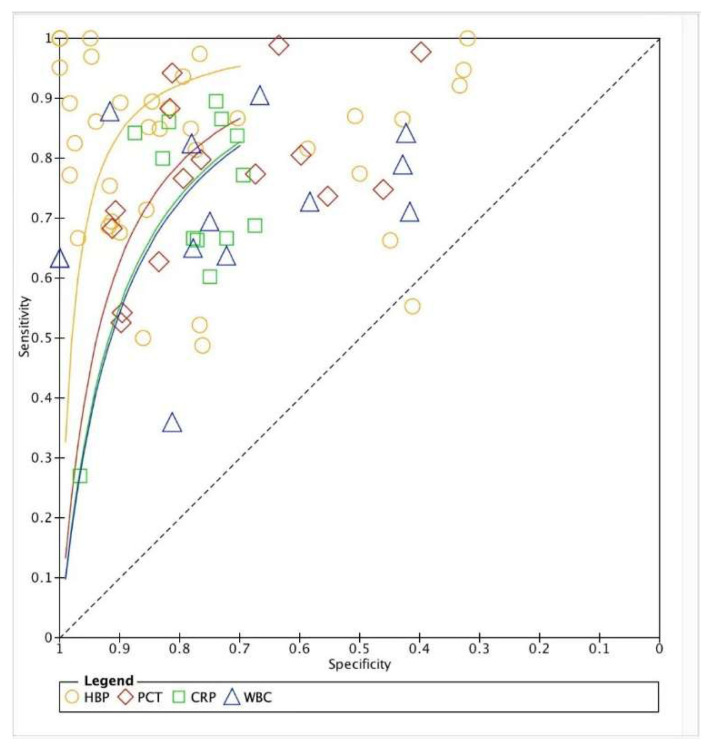
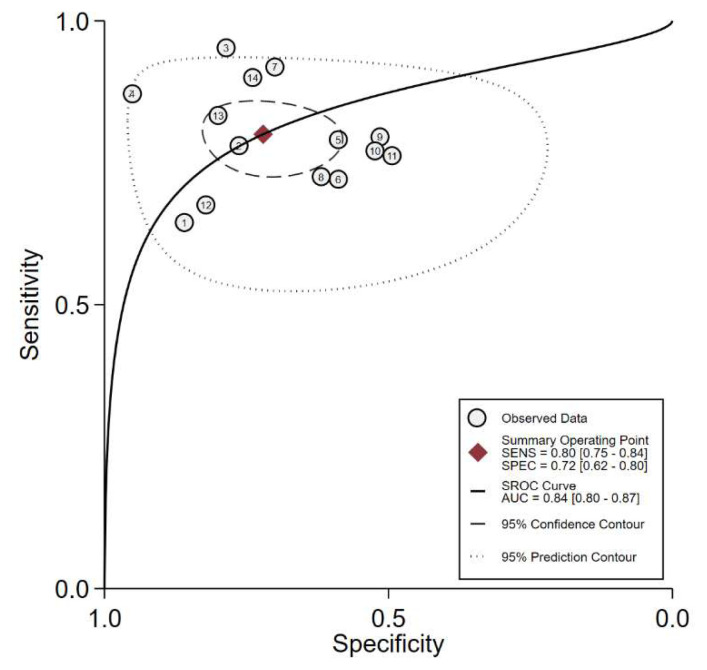
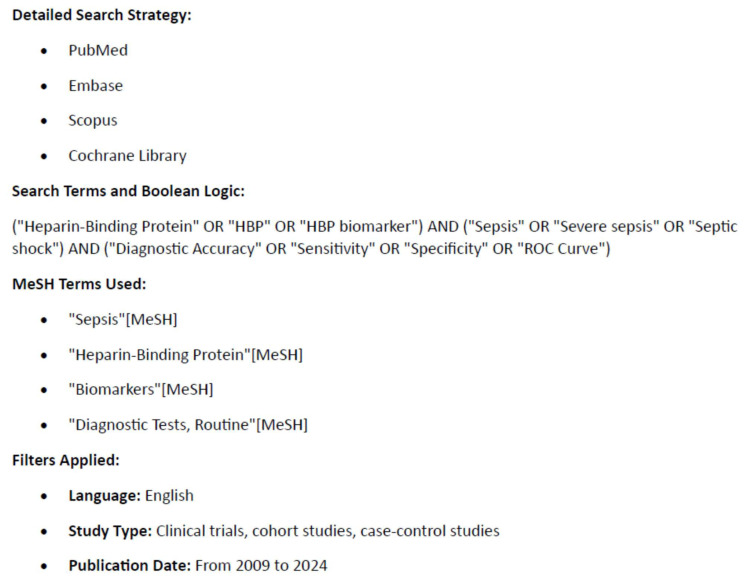
Heparin-binding protein (HBP) is a granule protein derived from neutrophils, located in secretory vesicles and neutrophilic granules, also known as cationic antimicrobial protein of 37 kDa (CAP37) or azurocidin. This study evaluates the diagnostic and prognostic value of HBP levels in relation to infection, organ dysfunction, and mortality in adult patients. A systematic review and meta-analysis were conducted by searching PubMed, Web of Science, EMBASE, and the Cochrane Database from their inception through June 2024. Original studies assessing HBP levels' diagnostic and prognostic utility in predicting infection and disease severity in critically ill adult patients were included. The primary outcome was the diagnostic and predictive role of HBP in infection and severity. The Quality Assessment of Diagnostic Accuracy Studies 2 (QUADAS-2) tool was used to evaluate bias risk. A total of 56 studies involving 11,486 patients were included. Pooled analysis showed HBP had a sensitivity of 0.87 (95% CI, 0.82-0.91), specificity of 0.87 (95% CI, 0.79-0.92), and an AUC of 0.93 (95% CI, 0.91-0.95) for infection diagnosis. For prognostic assessment, sensitivity was 0.77 (95% CI, 0.74-0.80), specificity was 0.72 (95% CI, 0.68-0.76), and AUC was 0.81 (95% CI, 0.78-0.85). HBP outperformed procalcitonin (PCT), C-reactive protein (CRP), and white blood cell count (WBC) in diagnosing and predicting critical illness. No publication bias was detected. HBP demonstrates high sensitivity and specificity for diagnosing infections in critically ill adult patients. Additionally, it effectively predicts disease progression, including organ dysfunction and mortality, surpassing traditional biomarkers such as PCT, CRP, and WBC. All that cannot be true for subjects with severe neutropenia.
期刊介绍:
Reciprocal interdependence between infectious and hematologic diseases (malignant and non-malignant) is well known. This relationship is particularly evident in Mediterranean countries. Parasitosis as Malaria, Leishmaniosis, B Hookworms, Teniasis, very common in the southeast Mediterranean area, infect about a billion people and manifest prevalently with anemia so that they are usually diagnosed mostly by experienced hematologist on blood or bone marrow smear. On the other hand, infections are also a significant problem in patients affected by hematological malignancies. The blood is the primary vector of HIV infection, which otherwise manifest with symptoms related to a reduction in T lymphocytes. In turn, infections can favor the insurgency of hematological malignancies. The causative relationship between Epstein-Barr virus infection, Helicobacter pylori, hepatitis C virus, HIV and lymphoproliferative diseases is well known.





 京公网安备 11010802042870号
京ICP备2023020795号-1
京公网安备 11010802042870号
京ICP备2023020795号-1
 分享
分享
 求助内容:
求助内容: 应助结果提醒方式:
 扫码关注我们