Sintia Naianne Pereira Feitoza , Laiorayne Araújo de Lima , Carla Aparecida Soares Saraiva , Weslla da Silva Dias , Ana Beatriz Azevedo de Medeiros , Artur Cezar de Carvalho Fernandes , Marcos Bryan Heinemann , Fernando Nogueira de Souza , Nivea Regina Oliveira Felisberto , Mateus Lacerda Pereira Lemos , Antônio Silvio do Egito , Celso José Bruno de Oliveira
{"title":"Evaluation of propidium monoazide for 16S ribosomal RNA metabarcoding assessment of microbial communities in 60-day ripened raw goat milk cheese","authors":"Sintia Naianne Pereira Feitoza , Laiorayne Araújo de Lima , Carla Aparecida Soares Saraiva , Weslla da Silva Dias , Ana Beatriz Azevedo de Medeiros , Artur Cezar de Carvalho Fernandes , Marcos Bryan Heinemann , Fernando Nogueira de Souza , Nivea Regina Oliveira Felisberto , Mateus Lacerda Pereira Lemos , Antônio Silvio do Egito , Celso José Bruno de Oliveira","doi":"10.3168/jdsc.2025-0894","DOIUrl":null,"url":null,"abstract":"<div><div>Cheese ripening is a complex microbial process marked by significant shifts in microbial composition. Considering that propidium monoazide (PMA) depletes DNA from nonviable cells, we hypothesized that PMA treatment of cheese samples could affect the microbiota characterization of 60-d-ripened raw goat curd cheese by 16S rRNA metabarcoding sequencing. After ripening, PMA-treated and nontreated (control) samples from the same cheese units were processed for DNA extraction, library preparation, and 16S rRNA metabarcoding sequencing on an Illumina MiSeq platform. Downstream bioinformatic analyses for microbial diversity assessment were performed using QIIME 2 and the phyloseq package in R. Statistical analyses included permutational multivariate analysis of variance (PERMANOVA), Wilcoxon tests, and linear discriminant analysis effect size (LEfSe). No significant differences were observed in either α or β diversity metrics between PMA-treated and nontreated samples. However, PMA treatment significantly reduced the abundance of farm environment–associated <em>Dickeya</em> and <em>Pectobacteriaceae</em> taxa in cheese samples, thus improving the accuracy of determining the cheese microbial structure using next-generation sequencing technologies. Further longitudinal studies focusing on different sampling periods during ripening, as well as other cheese types, may shed light on the potential benefits of using PMA for improving the accuracy of cheese microbial community characterization by next-generation sequencing.</div></div>","PeriodicalId":94061,"journal":{"name":"JDS communications","volume":"7 2","pages":"Pages 134-139"},"PeriodicalIF":2.2000,"publicationDate":"2026-03-01","publicationTypes":"Journal Article","fieldsOfStudy":null,"isOpenAccess":false,"openAccessPdf":"","citationCount":"0","resultStr":null,"platform":"Semanticscholar","paperid":null,"PeriodicalName":"JDS communications","FirstCategoryId":"1085","ListUrlMain":"https://www.sciencedirect.com/science/article/pii/S2666910226000074","RegionNum":0,"RegionCategory":null,"ArticlePicture":[],"TitleCN":null,"AbstractTextCN":null,"PMCID":null,"EPubDate":"2026/1/16 0:00:00","PubModel":"Epub","JCR":"","JCRName":"","Score":null,"Total":0}
引用次数: 0
Abstract
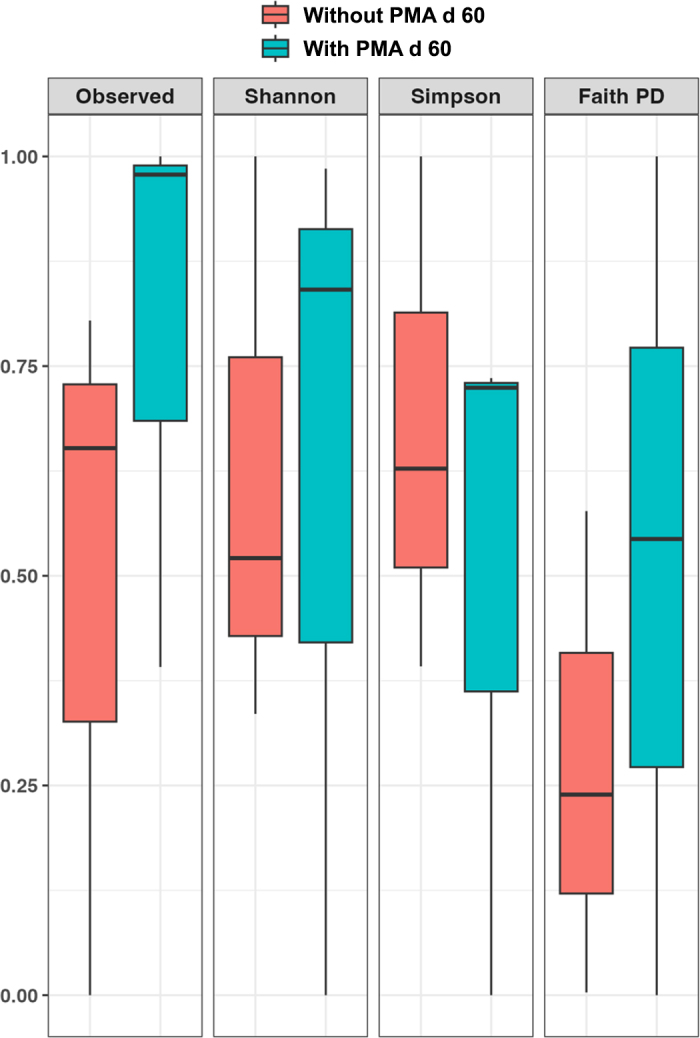
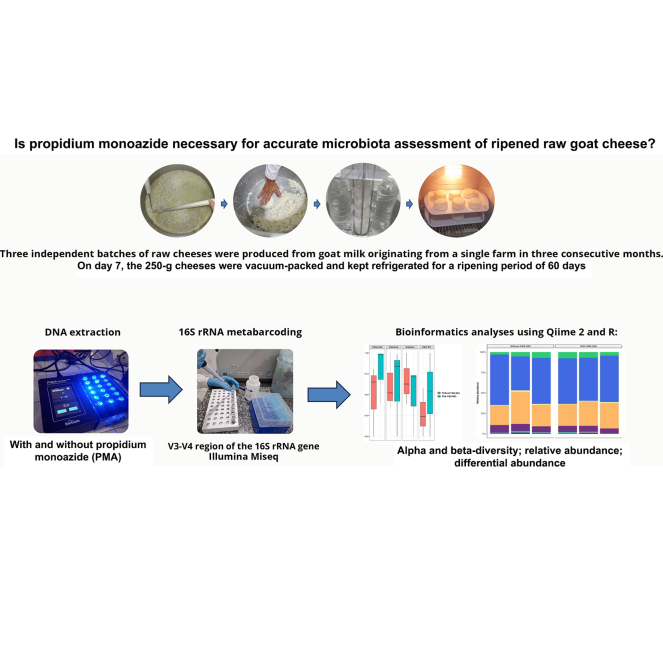
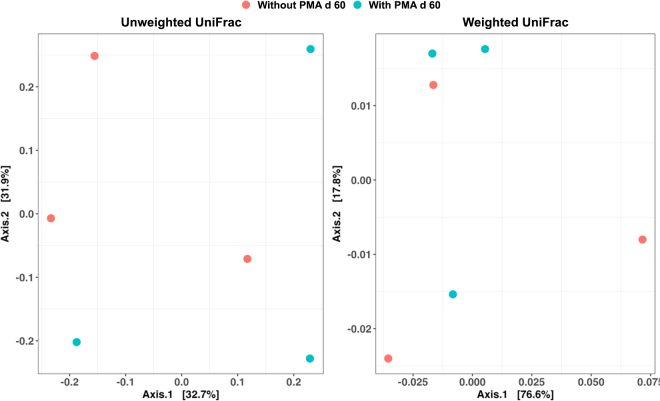
Cheese ripening is a complex microbial process marked by significant shifts in microbial composition. Considering that propidium monoazide (PMA) depletes DNA from nonviable cells, we hypothesized that PMA treatment of cheese samples could affect the microbiota characterization of 60-d-ripened raw goat curd cheese by 16S rRNA metabarcoding sequencing. After ripening, PMA-treated and nontreated (control) samples from the same cheese units were processed for DNA extraction, library preparation, and 16S rRNA metabarcoding sequencing on an Illumina MiSeq platform. Downstream bioinformatic analyses for microbial diversity assessment were performed using QIIME 2 and the phyloseq package in R. Statistical analyses included permutational multivariate analysis of variance (PERMANOVA), Wilcoxon tests, and linear discriminant analysis effect size (LEfSe). No significant differences were observed in either α or β diversity metrics between PMA-treated and nontreated samples. However, PMA treatment significantly reduced the abundance of farm environment–associated Dickeya and Pectobacteriaceae taxa in cheese samples, thus improving the accuracy of determining the cheese microbial structure using next-generation sequencing technologies. Further longitudinal studies focusing on different sampling periods during ripening, as well as other cheese types, may shed light on the potential benefits of using PMA for improving the accuracy of cheese microbial community characterization by next-generation sequencing.





 京公网安备 11010802042870号
京ICP备2023020795号-1
京公网安备 11010802042870号
京ICP备2023020795号-1
 分享
分享
 求助内容:
求助内容: 应助结果提醒方式:
 扫码关注我们