Mikaela Terra Souza Barreto, Carolina Tieppo Camarozano, Marília Corrêa de Melo, Aloísio Coelho Junior, Lessando Moreira Gontijo, Tamara Akemi Takahashi, José Roberto Postali Parra
{"title":"Storage of Euschistus heros (Fabricius, 1794) Eggs for Biological Control with Telenomus podisi Ashmead, 1851 in Open Fields in Brazil.","authors":"Mikaela Terra Souza Barreto, Carolina Tieppo Camarozano, Marília Corrêa de Melo, Aloísio Coelho Junior, Lessando Moreira Gontijo, Tamara Akemi Takahashi, José Roberto Postali Parra","doi":"10.1007/s13744-026-01380-z","DOIUrl":null,"url":null,"abstract":"<p><p>A successful augmentative biological control program requires continuous and large-scale production of high-quality natural enemies, which depends on the development of appropriate storage techniques for these organisms and their hosts. In this study, we stored Euschistus heros (Fabricius, 1978) eggs at low temperatures, to determine the most viable storage condition and the duration for which these eggs can be stored without reducing acceptance by the parasitoid Telenomus podisi Ashmead, 1893, as well as the quality of its progeny (individuals to be released in the field). Egg storage was evaluated under three conditions: a conventional freezer (-15°C), an ultra-low temperature (ULT) freezer (-80°C), and liquid nitrogen (-196°C) for a period of 12 months. Parasitism of eggs stored under these three conditions was assessed at different intervals. The parasitoid parental (F<sub>0</sub>) generation was evaluated for parasitism, egg-to-adult development time, emergence, and sex ratio. In the progeny (F<sub>1</sub>), parasitism, emergence, and longevity in newly laid E. heros eggs were assessed. The ULT freezer and liquid-nitrogen storage conditions resulted in the highest parasitism rates of T. podisi in both the parental generation and its progeny. Storage in a conventional freezer was less suitable for parasitism and the viability of T. podisi. The results confirm that E. heros eggs can be stored in a ULT freezer or liquid nitrogen while maintaining their quality, thereby enabling production and storage during the off-season.</p>","PeriodicalId":19071,"journal":{"name":"Neotropical Entomology","volume":"55 1","pages":""},"PeriodicalIF":1.7000,"publicationDate":"2026-03-13","publicationTypes":"Journal Article","fieldsOfStudy":null,"isOpenAccess":false,"openAccessPdf":"https://www.ncbi.nlm.nih.gov/pmc/articles/PMC12987777/pdf/","citationCount":"0","resultStr":null,"platform":"Semanticscholar","paperid":null,"PeriodicalName":"Neotropical Entomology","FirstCategoryId":"97","ListUrlMain":"https://doi.org/10.1007/s13744-026-01380-z","RegionNum":3,"RegionCategory":"农林科学","ArticlePicture":[],"TitleCN":null,"AbstractTextCN":null,"PMCID":null,"EPubDate":"","PubModel":"","JCR":"Q2","JCRName":"ENTOMOLOGY","Score":null,"Total":0}
引用次数: 0
Abstract
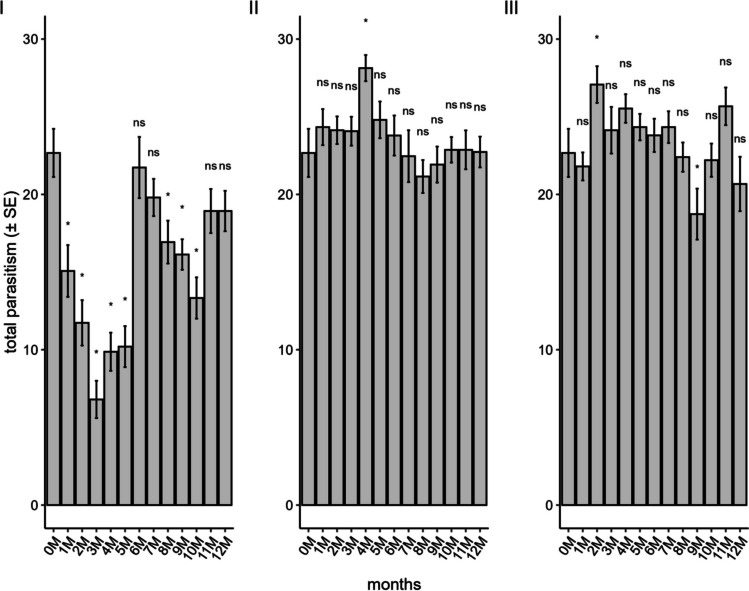
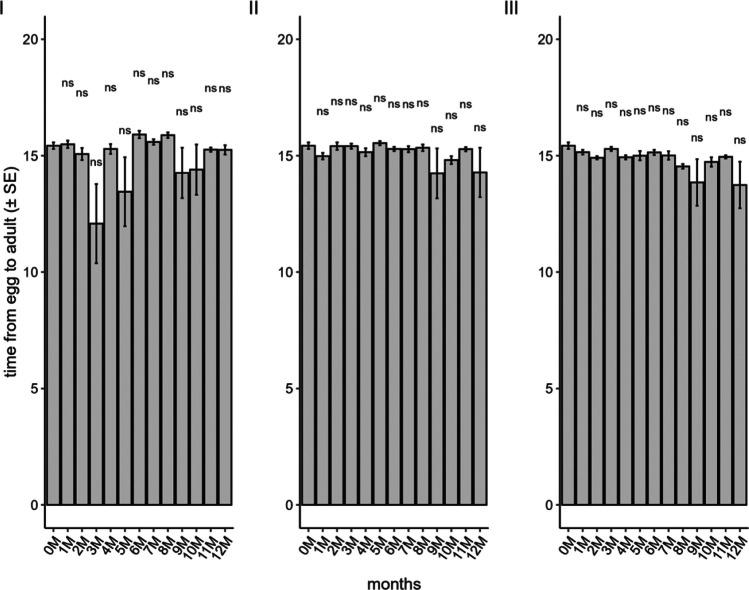
A successful augmentative biological control program requires continuous and large-scale production of high-quality natural enemies, which depends on the development of appropriate storage techniques for these organisms and their hosts. In this study, we stored Euschistus heros (Fabricius, 1978) eggs at low temperatures, to determine the most viable storage condition and the duration for which these eggs can be stored without reducing acceptance by the parasitoid Telenomus podisi Ashmead, 1893, as well as the quality of its progeny (individuals to be released in the field). Egg storage was evaluated under three conditions: a conventional freezer (-15°C), an ultra-low temperature (ULT) freezer (-80°C), and liquid nitrogen (-196°C) for a period of 12 months. Parasitism of eggs stored under these three conditions was assessed at different intervals. The parasitoid parental (F0) generation was evaluated for parasitism, egg-to-adult development time, emergence, and sex ratio. In the progeny (F1), parasitism, emergence, and longevity in newly laid E. heros eggs were assessed. The ULT freezer and liquid-nitrogen storage conditions resulted in the highest parasitism rates of T. podisi in both the parental generation and its progeny. Storage in a conventional freezer was less suitable for parasitism and the viability of T. podisi. The results confirm that E. heros eggs can be stored in a ULT freezer or liquid nitrogen while maintaining their quality, thereby enabling production and storage during the off-season.
期刊介绍:
Neotropical Entomology is a bimonthly journal, edited by the Sociedade Entomológica do Brasil (Entomological Society of Brazil) that publishes original articles produced by Brazilian and international experts in several subspecialties of entomology. These include bionomics, systematics, morphology, physiology, behavior, ecology, biological control, crop protection and acarology.






 京公网安备 11010802042870号
京ICP备2023020795号-1
京公网安备 11010802042870号
京ICP备2023020795号-1
 分享
分享
 求助内容:
求助内容: 应助结果提醒方式:
 扫码关注我们