Aniek E van Diepen, Songul Kucukcelebi, Judith de Vos-Geelen, Nigel G Kooreman
{"title":"Immunotherapy for Solid Tumours: Current Clinical Landscape and Future Directions.","authors":"Aniek E van Diepen, Songul Kucukcelebi, Judith de Vos-Geelen, Nigel G Kooreman","doi":"10.1159/000549862","DOIUrl":null,"url":null,"abstract":"<p><strong>Background: </strong>Cancer immunotherapy has transformed the therapeutic landscape of oncology by harnessing the body's immune system to recognise and eliminate malignant cells. In certain tumour types, such as melanoma and non-small cell lung cancer, immune-based therapies have led to durable clinical responses and significantly improved survival. These successes have fuelled the rapid integration of immunotherapeutic approaches into standard treatment regimens. However, their effectiveness in the majority of solid tumours remains limited. Several biological and physical barriers underlie this limited efficacy. A major challenge is the immunosuppressive nature of the tumour microenvironment (TME), which hampers effective immune cell infiltration and function. In many solid tumours, chronic inflammation, poor antigen presentation, a low mutational burden, and the presence of suppressive myeloid and stromal cells create an environment resistant to immune activation. In addition, high intra-tumoral pressure and abnormal vasculature further restrict drug delivery and immune cell trafficking, particularly in desmoplastic cancers such as pancreatic and prostate cancer.</p><p><strong>Summary: </strong>Recent advances in immuno-oncology have focused on strategies to overcome these barriers and convert \"cold\" tumours, those lacking immune cell infiltration, into \"hot,\" immune-inflamed tumours. Despite this progress, clinical translation has proven to be complex, with mixed results across various tumour types. While some patients derive long-term benefit from immunotherapy, others exhibit primary or acquired resistance, underscoring the need for better patient stratification and predictive biomarkers.</p><p><strong>Key messages: </strong>This review provides a comprehensive overview of the evolving field of immunotherapy for solid tumours, discussing key mechanisms of immune resistance, the role of the TME, and the multifactorial nature of therapeutic failure. It highlights the importance of understanding tumour-immune interactions in their full biological context, and explores current thinking on how to reshape the immune landscape of solid tumours. By addressing both immunological and physical barriers, future approaches may broaden the benefit of immunotherapy beyond its current scope, ultimately improving outcomes for patients with traditionally treatment-resistant cancers.</p>","PeriodicalId":12222,"journal":{"name":"European Surgical Research","volume":" ","pages":"21-29"},"PeriodicalIF":2.5000,"publicationDate":"2026-01-01","publicationTypes":"Journal Article","fieldsOfStudy":null,"isOpenAccess":false,"openAccessPdf":"https://www.ncbi.nlm.nih.gov/pmc/articles/PMC12807497/pdf/","citationCount":"0","resultStr":null,"platform":"Semanticscholar","paperid":null,"PeriodicalName":"European Surgical Research","FirstCategoryId":"3","ListUrlMain":"https://doi.org/10.1159/000549862","RegionNum":4,"RegionCategory":"医学","ArticlePicture":[],"TitleCN":null,"AbstractTextCN":null,"PMCID":null,"EPubDate":"2025/12/11 0:00:00","PubModel":"Epub","JCR":"Q2","JCRName":"SURGERY","Score":null,"Total":0}
引用次数: 0
Abstract
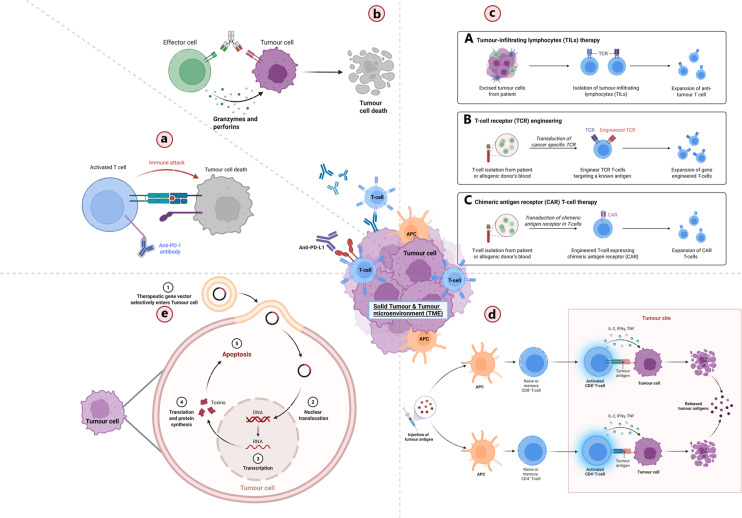
Background: Cancer immunotherapy has transformed the therapeutic landscape of oncology by harnessing the body's immune system to recognise and eliminate malignant cells. In certain tumour types, such as melanoma and non-small cell lung cancer, immune-based therapies have led to durable clinical responses and significantly improved survival. These successes have fuelled the rapid integration of immunotherapeutic approaches into standard treatment regimens. However, their effectiveness in the majority of solid tumours remains limited. Several biological and physical barriers underlie this limited efficacy. A major challenge is the immunosuppressive nature of the tumour microenvironment (TME), which hampers effective immune cell infiltration and function. In many solid tumours, chronic inflammation, poor antigen presentation, a low mutational burden, and the presence of suppressive myeloid and stromal cells create an environment resistant to immune activation. In addition, high intra-tumoral pressure and abnormal vasculature further restrict drug delivery and immune cell trafficking, particularly in desmoplastic cancers such as pancreatic and prostate cancer.
Summary: Recent advances in immuno-oncology have focused on strategies to overcome these barriers and convert "cold" tumours, those lacking immune cell infiltration, into "hot," immune-inflamed tumours. Despite this progress, clinical translation has proven to be complex, with mixed results across various tumour types. While some patients derive long-term benefit from immunotherapy, others exhibit primary or acquired resistance, underscoring the need for better patient stratification and predictive biomarkers.
Key messages: This review provides a comprehensive overview of the evolving field of immunotherapy for solid tumours, discussing key mechanisms of immune resistance, the role of the TME, and the multifactorial nature of therapeutic failure. It highlights the importance of understanding tumour-immune interactions in their full biological context, and explores current thinking on how to reshape the immune landscape of solid tumours. By addressing both immunological and physical barriers, future approaches may broaden the benefit of immunotherapy beyond its current scope, ultimately improving outcomes for patients with traditionally treatment-resistant cancers.
期刊介绍:
''European Surgical Research'' features original clinical and experimental papers, condensed reviews of new knowledge relevant to surgical research, and short technical notes serving the information needs of investigators in various fields of operative medicine. Coverage includes surgery, surgical pathophysiology, drug usage, and new surgical techniques. Special consideration is given to information on the use of animal models, physiological and biological methods as well as biophysical measuring and recording systems. The journal is of particular value for workers interested in pathophysiologic concepts, new techniques and in how these can be introduced into clinical work or applied when critical decisions are made concerning the use of new procedures or drugs.




 京公网安备 11010802042870号
京ICP备2023020795号-1
京公网安备 11010802042870号
京ICP备2023020795号-1
 分享
分享

 求助内容:
求助内容: 应助结果提醒方式:
 扫码关注我们