{"title":"Lessons from Exceptional Responders with High-Grade Brain Tumors Treated with Precision Targeted Therapies.","authors":"Umut Dişel, Shumei Kato, Aditya Shreenivas, Ayca Ersen Danyeli, Manmeet S Ahluwalia, Razelle Kurzrock","doi":"10.36401/JIPO-25-34","DOIUrl":null,"url":null,"abstract":"<p><strong>Background: </strong>High-grade gliomas are associated with dismal outcomes and have devastating neurologic sequelae. Standard-of-care surgery, radiation, and temozolomide yield a median survival of 14-16 months in patients with glioblastoma (GBM).</p><p><strong>Methods: </strong>We report four patients with high-grade glioma (two with GBM; one initially diagnosed with GBM, now classified as World Health Organization grade 4 <i>IDH1-</i>mutant astrocytoma; and one with oligosarcoma [grade 4]). Tumor next-generation sequencing (NGS) was performed for all four patients, and they were treated based on their biomarkers.</p><p><strong>Results: </strong>NGS yielded actionable alterations targeted after conventional surgery/chemoradiation therapy: imatinib (for <i>KIT</i> and <i>PDGRA</i> amplification) and bevacizumab (for <i>KDR</i> [<i>VEGFR2</i>] amplification); everolimus (mTOR inhibitor for <i>TSC2</i> and <i>PTEN</i> loss-of-function alterations); and ivosidenib (IDH1 inhibitor for <i>IDH1</i> mutations in two cases, including the oligosarcoma). Three patients remain in radiographic and clinical remission at 39+, 48, and 52+ months; the patient with oligosarcoma showed clinical and imaging response lasting 8 months.</p><p><strong>Conclusions: </strong>Our exceptional responders with high-grade gliomas suggest that biomarker-matched targeted therapy can benefit select patients with high-grade glioma and warrants prospective clinical trials.</p>","PeriodicalId":16081,"journal":{"name":"Journal of Immunotherapy and Precision Oncology","volume":"9 1","pages":"25-31"},"PeriodicalIF":3.2000,"publicationDate":"2026-03-16","publicationTypes":"Journal Article","fieldsOfStudy":null,"isOpenAccess":false,"openAccessPdf":"https://www.ncbi.nlm.nih.gov/pmc/articles/PMC13004655/pdf/","citationCount":"0","resultStr":null,"platform":"Semanticscholar","paperid":null,"PeriodicalName":"Journal of Immunotherapy and Precision Oncology","FirstCategoryId":"1085","ListUrlMain":"https://doi.org/10.36401/JIPO-25-34","RegionNum":0,"RegionCategory":null,"ArticlePicture":[],"TitleCN":null,"AbstractTextCN":null,"PMCID":null,"EPubDate":"2026/2/1 0:00:00","PubModel":"eCollection","JCR":"Q3","JCRName":"Medicine","Score":null,"Total":0}
引用次数: 0
Abstract
Background: High-grade gliomas are associated with dismal outcomes and have devastating neurologic sequelae. Standard-of-care surgery, radiation, and temozolomide yield a median survival of 14-16 months in patients with glioblastoma (GBM).
Methods: We report four patients with high-grade glioma (two with GBM; one initially diagnosed with GBM, now classified as World Health Organization grade 4 IDH1-mutant astrocytoma; and one with oligosarcoma [grade 4]). Tumor next-generation sequencing (NGS) was performed for all four patients, and they were treated based on their biomarkers.
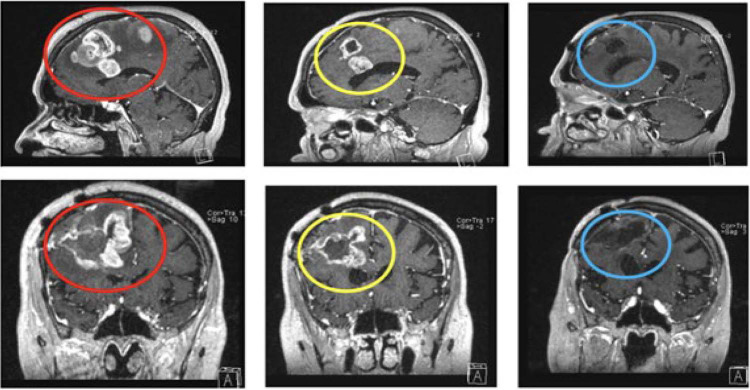
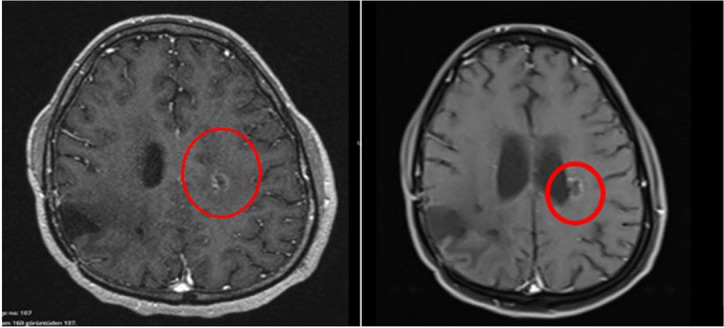
Results: NGS yielded actionable alterations targeted after conventional surgery/chemoradiation therapy: imatinib (for KIT and PDGRA amplification) and bevacizumab (for KDR [VEGFR2] amplification); everolimus (mTOR inhibitor for TSC2 and PTEN loss-of-function alterations); and ivosidenib (IDH1 inhibitor for IDH1 mutations in two cases, including the oligosarcoma). Three patients remain in radiographic and clinical remission at 39+, 48, and 52+ months; the patient with oligosarcoma showed clinical and imaging response lasting 8 months.
Conclusions: Our exceptional responders with high-grade gliomas suggest that biomarker-matched targeted therapy can benefit select patients with high-grade glioma and warrants prospective clinical trials.






 京公网安备 11010802042870号
京ICP备2023020795号-1
京公网安备 11010802042870号
京ICP备2023020795号-1
 分享
分享
 求助内容:
求助内容: 应助结果提醒方式:
 扫码关注我们